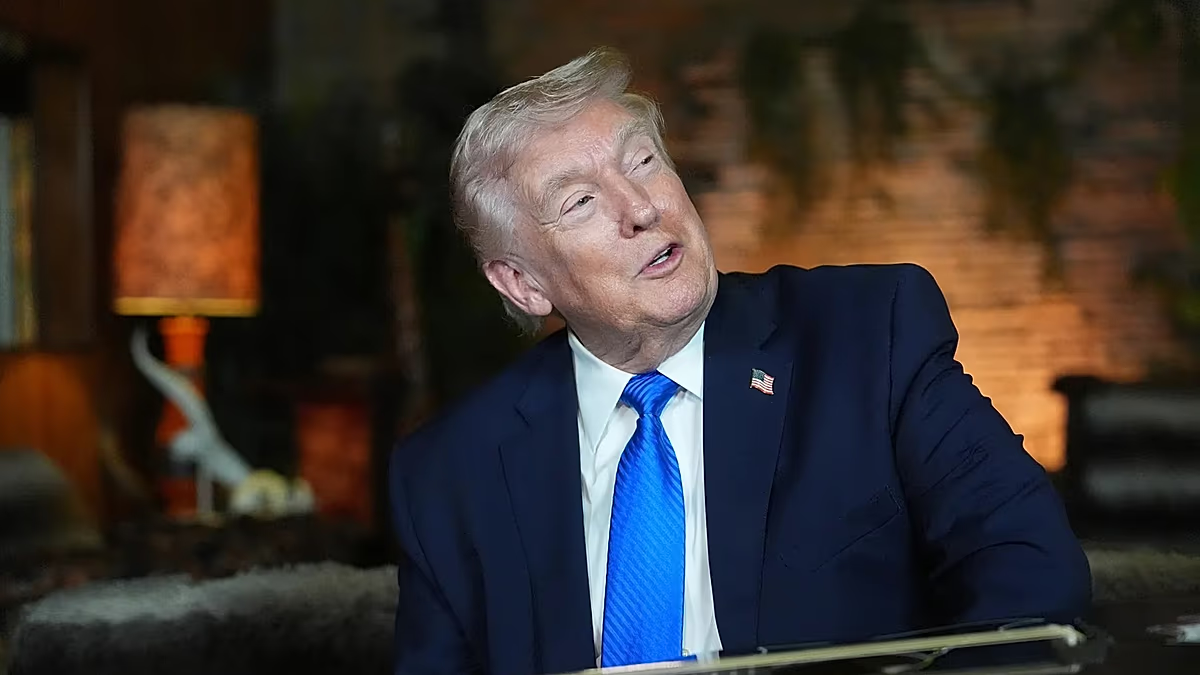
Trump didn’t clarify who has been involved in the talks but Iran’s parliament speaker and foreign minister denied any such negotiations have happened.
We’re ending our live coverage of day 24 of the war in Iran now, a day which saw mixed messages about the status of alleged peace talks to bring an end to the conflict.
US President Donald Trump claimed his administration has been negotiating with Iran « for a long time » and believes a deal is close, saying Iran « means business. »
But those claims were contradicted by Tehran, with both the foreign office and the parliament speaker denying any such negotiations had ever taken place.
Iranian parliament speaker Mohammad Bagher Qalibaf dismissed the reports as fake news to « manipulate the financial and oil markets. »
The price for a barrel of Brent crude fell 10% to $100.96 (€86.96), down from nearly $120 (€103) last week, after Trump said the US and Iran had held productive talks « regarding a complete and total resolution of our hostilities in the Middle East. »
The S&P 500 rose 1.5% toward its best day since the war began on 28 February.
Meanwhile, Israel’s Prime Minister Benjamin Netanyahu said that attacks on Iran and Lebanon would continue, with Monday ending with fresh air strikes on Hezbollah positions in southern Beirut.
« There’s more to come. We will protect our vital interests in any situation, » Netanyahu said.


${title}
Live ended
Trump says Iran ‘means business’ in peace talks as Iranian officials deny negotiations
US President Donald Trump said his administration has been negotiating with Iran “for a long time” and he believes a deal is close.
But he didn’t clarify who’s been involved in the talks. Iran’s parliament speaker and foreign minister denied again on Monday that any such negotiations have happened.
“They want peace,” Trump said. “They’ve agreed they will not have a nuclear weapon, you know, et cetera, et cetera, but we’ll see.”
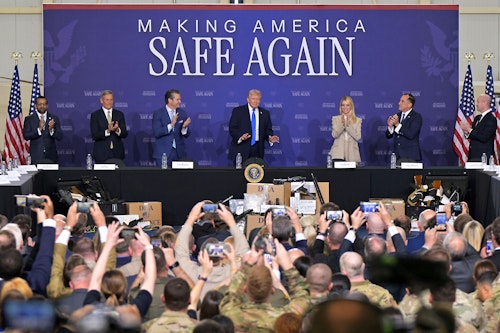
In his remarks in Memphis on Monday, Trump said there’s a “very good chance” of a deal this week.
He credited his threat to blow up Iranian power plants, which he then paused for another five days.
UN Security Council weighs resolution on use of force in Hormuz
The UN Security Council is negotiating on a draft resolution introduced by Bahrain to authorise states to use « all necessary means » to ensure freedom of navigation in the Strait of Hormuz, diplomatic sources said on Monday.
The draft text also demands that Iran « immediately cease all attacks against merchant and commercial vessels and any attempt to impede lawful transit passage or freedom of navigation » in and around the Strait.
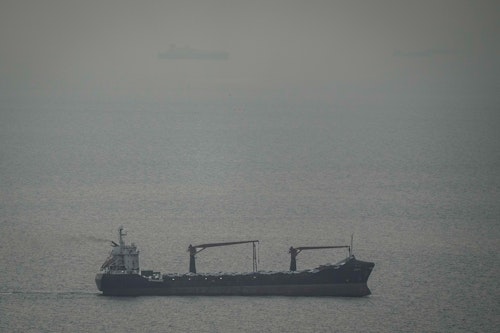
Just a trickle of cargo ships and tankers, most of them Iranian, have made it through the Strait since Iran effectively blocked it in response to US-Israeli attacks on the country that began three weeks ago.
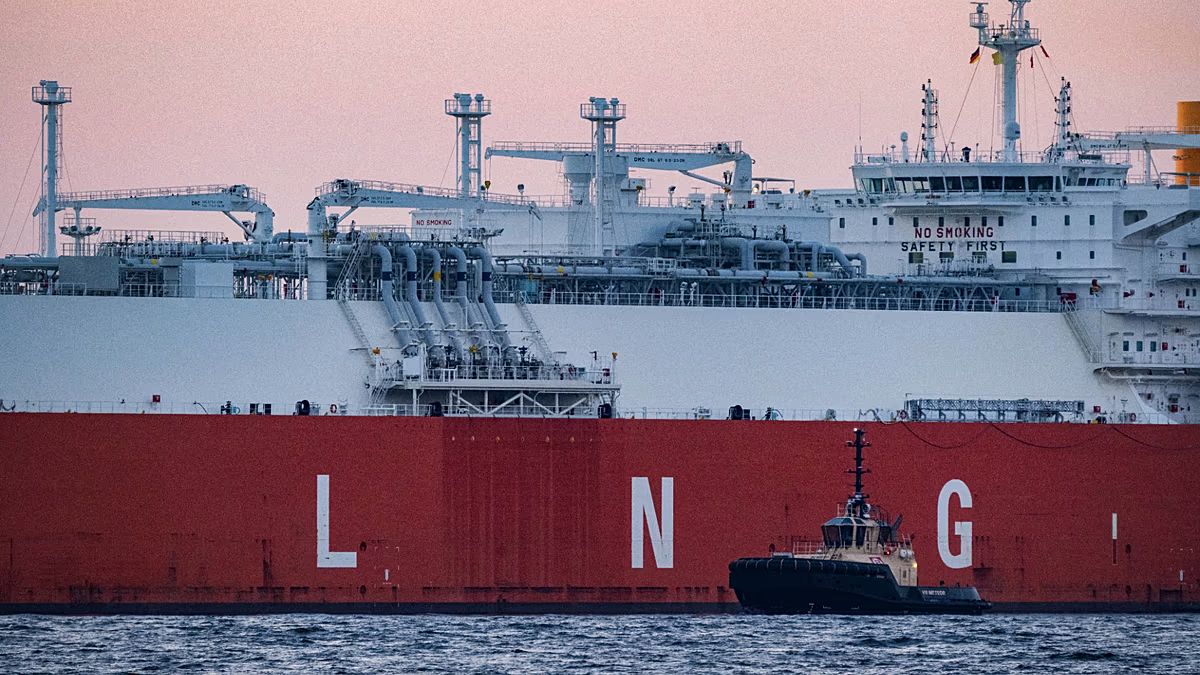
Normally, about a fifth of global crude oil and liquefied natural gas pass through the Strait.
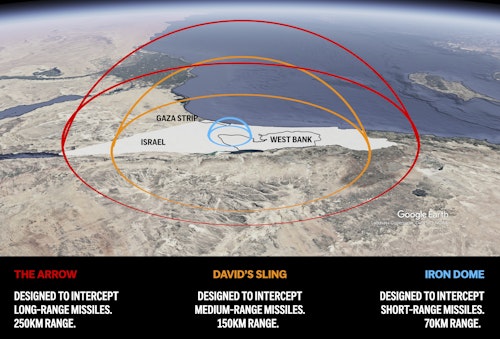
Israeli interceptor system malfunctions
A malfunction in Israel’s « David’s Sling » aerial interceptor system allowed two Iranian ballistic missiles to strike the south of the country, wounding dozens of people over the weekend, the military confirmed on Monday.
The system is a key component of Israel’s multi-layered air defence shield.
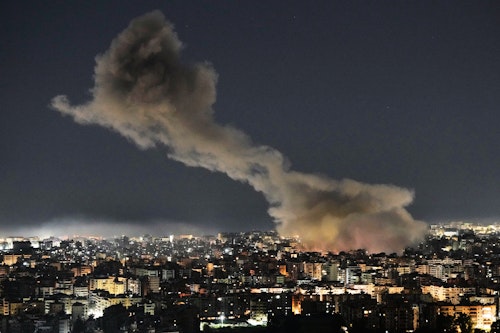
Israeli strike hits Beirut’s southern suburbs after warning
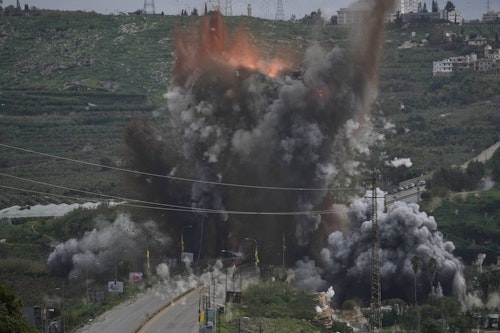
An Israeli air strike hit Beirut’s southern suburbs on Monday, state media reported, hours after the Israeli army issued a warning for residents of the area to evacuate.
Smoke was seen over the southern suburbs, which are considered a Hezbollah stronghold and have not been hit since Friday night.
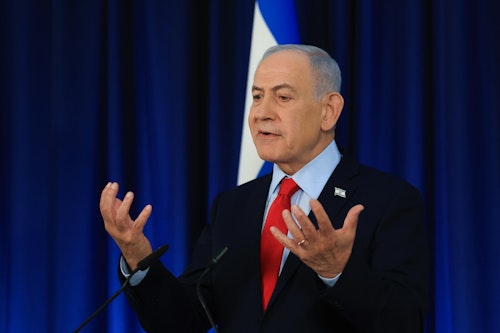
Israeli leader says attacks on Iran and Lebanon to continue
Israel’s Prime Minister Benjamin Netanyahu said on Monday that attacks on Iran and Lebanon will continue as the US reportedly considers a ceasefire.
Netanyahu says he spoke to Trump, who told him “there is a chance” to leverage battlefield gains into an agreement that realises the war’s objectives.
“At the same time, we continue to strike, both in Iran and in Lebanon,” he said. “There’s more to come. We will protect our vital interests in any situation.”
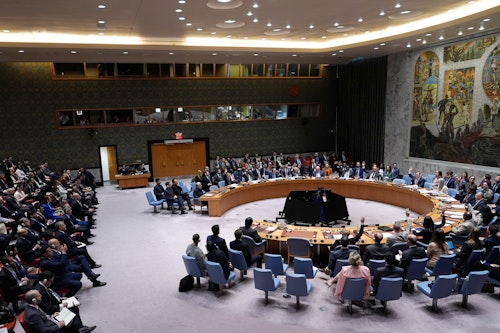
London summons envoy over Iran’s ‘reckless’ actions in UK, overseas
Britain’s Foreign Office on Monday summoned Iran’s ambassador, Seyed Ali Mousavi, criticising what it called Tehran’s « reckless and destabilising actions » in the UK and overseas.
« The summons follows the recent charging of two individuals, one Iranian national and one British-Iranian dual national, under the National Security Act, on suspicion of providing assistance to a foreign intelligence service, » a Foreign Office spokesperson said.
« This government will take all measures necessary to protect the British people, including exposing Iran’s reckless and destabilising actions at home and abroad, » the spokesperson added.
Iranian official denies negotiations with the US
Iranian parliament speaker Mohammad Bagher Qalibaf denied on Monday that Iran is negotiating with the United States to end the war, adding that “fakenews is used to manipulate the financial and oil markets.”
US President Donald Trump announced on social media before US markets opened on Monday that the US is currently holding negotiations with Iran and that Iran wants to reach a deal to end the war as it enters its fourth week.
Meanwhile, Israeli officials told local media that Trump’s top envoys Steve Witkoff and Jared Kushner reportedly held talks with Ghalibaf.
2/ No negotiations have been held with the US, and fakenews is used to manipulate the financial and oil markets and escape the quagmire in which the US and Israel are trapped.
— محمدباقر قالیباف | MB Ghalibaf (@mb_ghalibaf) March 23, 2026
Explosions and sirens ring out in Bahrain, journalists say
Several strong explosions and air alert sirens rang out on Monday in Bahrain, according to a journalist working for the AFP news agency, the first to be heard in the Gulf since US President Donald Trump said talks to end the war with Iran were under way.
« Citizens and residents are urged to remain calm and head to the nearest safe place, » Bahrain’s interior ministry said on social media.
The siren has been sounded .Citizens and residents are urged to remain calm and head to the nearest safe place
— Ministry of Interior (@moi_bahrain) March 23, 2026
Death toll in Lebanon reaches 1,039
The Lebanese Health Ministry said on Monday that 10 people had been killed over the past 24 hours.
At least 118 children and 79 women were among those killed by Israeli strikes in Lebanon since the outbreak of a new Israel-Hezbollah war, the ministry said.
The ministry said 90 more people were also wounded, raising the total number of injured to at least 2,876.
Iran foreign ministry says got messages from ‘friendly countries’ about US request for talks
Iran’s foreign ministry said on Monday that it had received messages through « friendly countries » about a request from the United States for talks, but denied any such negotiations had taken place since the start of the war.
« Over the past few days, messages were received through some friendly countries indicating a US request for negotiations aimed at ending the war, » said foreign ministry spokesman Esmaeil Baqaei, according to the official IRNA news agency.
However, he « denied any negotiations or talks with the United States during the past 24 days of the imposed war. »
Top EU diplomat says Trump’s halt on striking Iran energy is ‘very welcome’
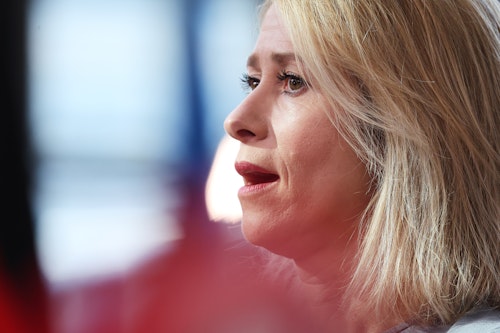
“I think any attacks on infrastructure are causing chaos in the region and really escalating this war even further,” European Union foreign policy chief Kaja Kallas said at a news conference in Nigeria.
Surging energy prices have pushed EU leaders to consider cost-cutting steps, including expanding renewables, adjusting taxes, pursuing new trade deals and scrapping carbon credits.
‘Point of no return’ looming in war, Red Cross says
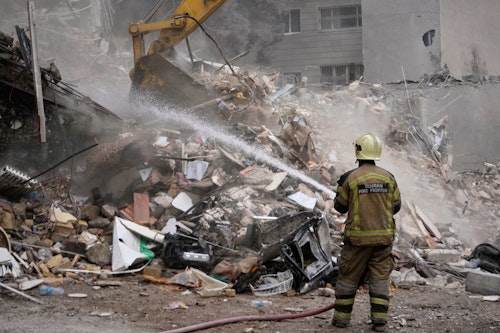
The International Committee of the Red Cross demanded on Monday a halt to the « war on essential infrastructure » in the Middle East, warning of potential « irreversible consequences » including harm to nuclear facilities.
« What we have seen in recent days in the Middle East risks reaching a point of no return, » ICRC President Mirjana Spoljaric warned in a statement.
UK warship, US carrier remain docked in Greece
The UK’s air defence destroyer HMS Dragon was docked at Greece’s Souda Bay naval base, en route to help defend British military bases in Cyprus from Iranian drone or missile attacks.
The ship departed the UK on 3 March, two days after an apparent Iranian drone launched from Lebanon struck the RAF Akrotiri air base, causing minor damage to an aircraft hangar.
No timeline was given for HMS Dragon’s arrival off Cyprus. Reports suggest it had to complete trainings before deployment.
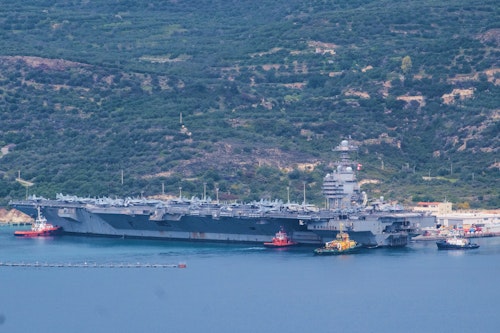
Meanwhile, the USS Gerald R. Ford aircraft carrier remains docked at the same naval base in Greece, 10 days after the military said it had a “not combat-related” fire while operating in the Red Sea.
Its departure meant the US has only one aircraft carrier supporting operations against Iran.
Egypt says it has intensified its efforts to de-escalate the war
The Foreign Ministry said in a statement on Monday that it was making “constant efforts and communications with all concerning parties” in the past days to avert “reaching to the point of no-return.
Egypt called for seizing on Trump’s announcement as an opportunity to end the war.
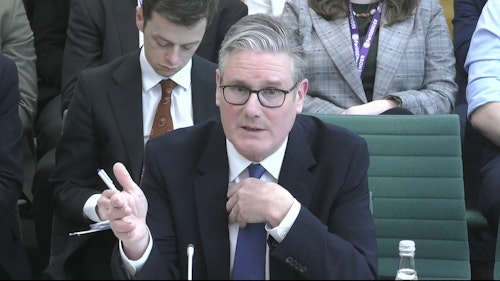
‘I welcome’ reported Iran-US talks, Starmer says
British Prime Minister Keir Starmer said on Monday he welcomed reported talks between the United States and Iran over the war.
« I welcome the talks reported between the US and Iran, » Starmer told a parliamentary committee, adding the UK was « aware » discussions were happening.
He talked late on Sunday by telephone with US President Donald Trump, according to Downing Street.
Trump has said there are « major points of agreement » between the two sides, but Iran has denied that the talks are taking place.
UAE oil giant chief says targeting Hormuz is ‘economic terrorism’
The chief of the United Arab Emirates’ state energy company ADNOC on Monday slammed Tehran’s actions to effectively blockade the Strait of Hormuz after US-Israeli strikes, a move that squeezed supplies and caused a surge in oil prices.
« Weaponising the Strait of Hormuz is not an act of aggression against one nation, » Sultan Ahmed Al Jaber said in virtual remarks to the CERAWeek conference in Houston.
« It’s economic terrorism against every nation. And no country should be allowed to hold Hormuz hostage, » he added.
US energy chief calls oil market disruptions ‘temporary’
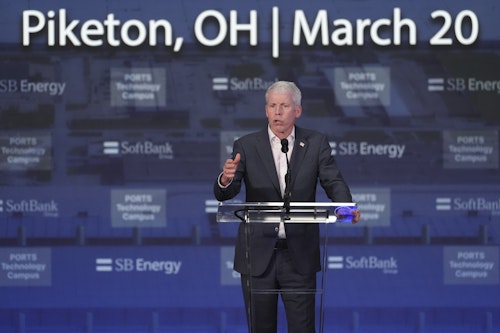
US Energy Secretary Chris Wright said on Monday that oil market disruptions are « temporary, » as costs surge on the back of war in Iran.
« Prices have not risen high enough yet to drive meaningful demand destruction, » he said at the annual CERAWeek conference in Houston.
He added that Washington has taken « pragmatic solutions » to allow sanctioned oil already floating on the water to enter the market, stressing that « these are mitigants of a situation that’s temporary. »
US and Iran talks have ‘major points of agreement,’ Trump says
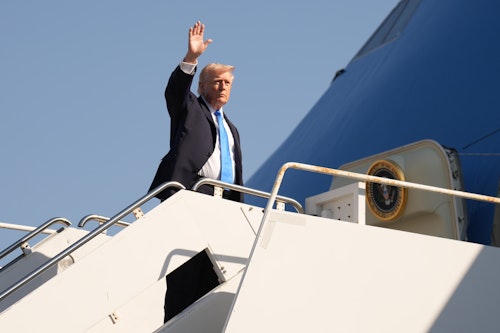
US President Donald Trump said Monday that there are « major points of agreement » in US-Iran talks which he said must result in Tehran giving up its nuclear ambitions and enriched uranium stockpile.
Trump said the talks, which Iran denies are taking place, were being conducted with a « top person » but not the country’s supreme leader.
« We’ve wiped out the leadership phase one, phase two, and largely phase three. But we’re dealing with the man who I believe is the most respected and the leader, » Trump told reporters.
« We want no enrichment, but we also want the enriched uranium. »
Trump also said that « regime change » was effectively underway in Iran, while warning that if talks with Iranian figures contacted by the United States do not succeed then bombing will continue.
Merz says ‘grateful’ Trump delaying Iran power plant strikes
Germany’s Chancellor Friedrich Merz said on Monday he was « grateful » to US President Donald Trump for delaying previously threatened strikes on Iranian power plants.
« I expressed my concerns to him regarding the announced attacks on the power plants in Iran, » Merz told a Berlin press conference about their phone call the previous day.
« I am grateful that he said today he is postponing them for another five days. »
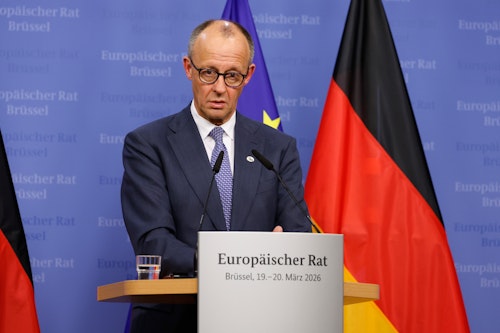
UN peacekeepers say headquarters in Lebanon struck
UNIFIL, the UN peacekeeping force in southern Lebanon, said on Monday that a building at its headquarters in the coastal town of Naqoura was struck by a projectile.
The UN said it believes it “was fired by a non-state actor,” an apparent reference to the Lebanese militant group Hezbollah.
The UNIFIL statement said that “over the past 48 hours, peacekeepers have recorded intense gunfire and explosions” in the Naqoura area, and “bullets, fragments, and shrapnel have hit buildings and open areas inside our headquarters. As a result, peacekeepers have been restricted to shelters to avoid injury.”
Hezbollah and Israeli forces have fought at multiple points along the border since Israel launched a renewed ground incursion into southern Lebanon.
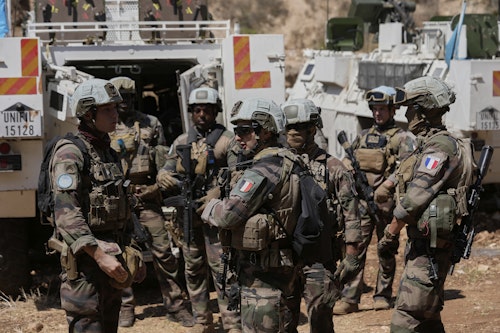
Iranian media says no negotiations with US after Trump announcement
Iranian state media said on Monday there were no negotiations between Tehran and Washington after US President Donald Trump announced talks towards ending the war.
« There are no talks between Tehran and Washington, » said Mehr news agency citing Iran’s foreign ministry, adding that Trump’s statements were part of a push « to reduce energy prices. »
The Fars and Tasnim news agencies carried similar reports, claiming that Trump had backed down due to Iran’s threats.
“Since the start of the war, messages have been sent to Tehran by some mediators, but Iran’s clear response has been that it will continue its defence until the required level of deterrence is achieved,” Tasnim’s report said.
“No negotiations have taken place and none are underway. With this kind of psychological warfare, neither the Strait of Hormuz will return to prewar conditions nor will calm return to energy markets.”
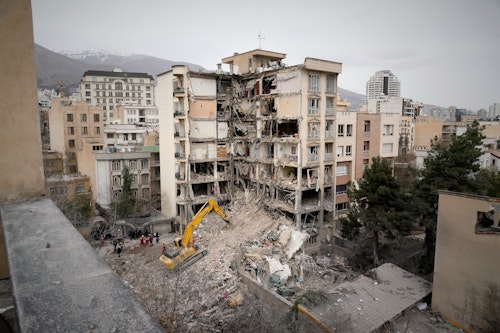
Trump surprise talks announcement signals willingness to end Iran war
US President Donald Trump’s unexpected announcement on Monday said not only that the US postponed the energy infrastructure strikes it threatened Tehran with, but that Washington and Tehran “have had over the last two days, very good and productive conversations regarding a complete and total resolution of our hostilities in the Middle East”.
At the end of his post on his social media which contains specific details, Trump also mentioned “ongoing meetings and discussions”, implying these are part of continued negotiations for a way out of war that the US side feels confident to highlight and to telegraph a possible resolution ahead, at a time when both sides appeared to keep escalating the hostilities over Tehran’s Strait of Hormuz blockade.
However, Trump appears to have limited the halt in strikes to power plants and energy infrastructure, and he did not mention Israel’s continued attacks on targets in Iran.
Trump’s surprise announcement also appears to coincide with a significant drop in the intensity of the Iranian strikes across the Gulf since last Friday, compared to the rate of its attacks since the war started, as observed by L’Observatoire de l’Europe’ journalists in Doha and Dubai.
In the 48 hours before Trump’s announcement, L’Observatoire de l’Europe observed that multiple reports from various sources began circulating on social media, purporting to show lists of demands from both the US and Iran to end the war and alleging that Arab countries were involved in the mediation.
These alleged lists of demands from both sides are still to be officially corroborated and confirmed, yet Trump’s announcement now appears to confer substance to the claims that the US and Iran have formulated their negotiating positions.
In the meantime, Tehran has issued an immediate statement saying there has been “no direct or indirect contact” with the US president, with Foreign Minister Abbas Araghchi saying Trump was “buying time”.
Iran’s leadership has kept insisting over the last days that they will not negotiate an end to the war, in an apparent show of strength to the Iranian people, signalling the Tehran regime remains in control.
Oil prices slide after Trump announces ‘productive conversations’ with Iran
Oil prices tumbled following US President Donald Trump’s statement that Washington « postponed any and all military strikes against Iranian power plants and energy infrastructure » for five days.
Doloresz Katanich has the full report below.

Markets reel as oil surges past $100 on Middle East conflict fears
European shares dipped Monday as oil prices continued to climb after comments from US President Donald Trump dashed hopes for a quick end to the war in Iran.
‘We all know who started this war,’ China’s Middle East envoy says
China’s Middle East envoy pinned the blame squarely on the US and Israel for a war he said has dealt a heavy blow to the global economy and shipping lanes.
“We all know who started this war,” Zhai Jun told reporters in Beijing after a recent trip to Saudi Arabia, the UAE, Bahrain, Kuwait and Egypt.
Asked about the biggest obstacle to a ceasefire, he quoted a Chinese saying. “To untie a belt, the person who tied it is needed,” he said, repeating his government’s call for the US and Israel to halt their military actions immediately and return to negotiations.
Zhai said the ongoing fighting made his delegation’s trip an unusual one, including witnessing missile interceptions above them.
“We heard explosions and sirens for the first time in a real war, he said.
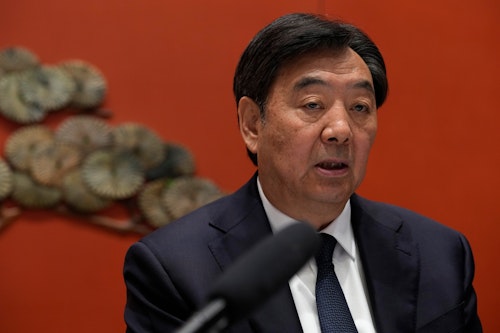
Iran state TV says Trump backed down
Iranian state television offered Tehran’s first reaction to US President Donald Trump’s decision to extend a deadline for reopening the Strait of Hormuz by five days.
The deadline should have been around 0000 GMT on Tuesday. Instead, Trump said on Monday he had extended it by five days.
Reacting to the news, Iranian state television said in a graphic on screen: “US president backs down following Iran’s firm warning.”
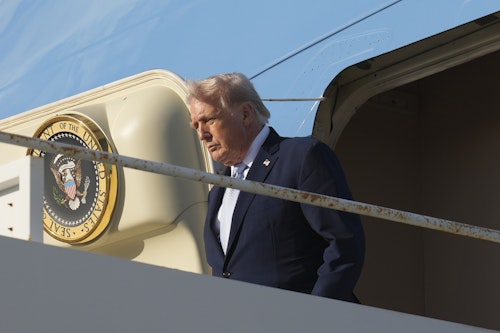
Oman working to secure transit through the Strait of Hormuz
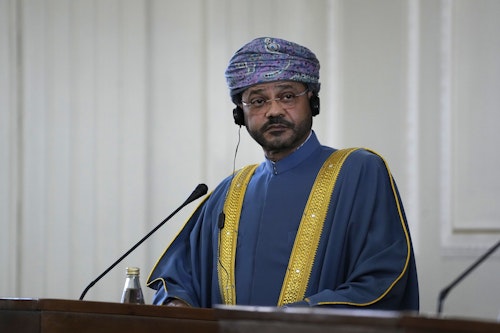
Oman’s top diplomat says his country, which has long mediated between the US and Iran, was working to secure safe transit through the Strait of Hormuz. He did not elaborate.
Foreign Minister Badr Albusaidi also wrote in a social media post that Iran is not to be blamed for the war.
“Whatever your view of Iran, this war is not of their making. This is already causing widespread economic problems,” he wrote.
Trump postpones Iran power plant strikes amid ‘very good’ peace talks
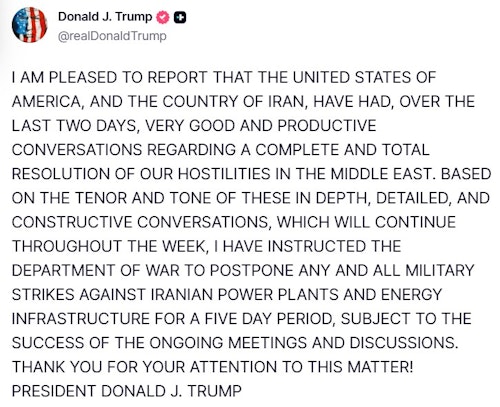
US President Donald Trump said Monday that he had ordered a halt to his threatened strikes on Iranian energy infrastructure after « very good and productive talks » with Tehran, and that negotiations are set to continue this week.
The United States and Iran « have had, over the last two days, very good and productive conversations regarding a complete and total resolution of our hostilities in the Middle East, » Trump wrote, in all capitals, early Monday on his Truth Social platform.
« Based on the tenor and tone » of the talks, « which will continue throughout the week, » Trump instructed the Department of Defence « to postpone any and all military strikes against Iranian power plants and energy infrastructure for a five day period, subject to the success of the ongoing meetings, » he added.
World’s largest aircraft carrier back at Crete port, reports claim
The USS Gerald R Ford, the world’s largest aircraft carrier that has been part of Iran war operations, on Monday returned to a naval base in Crete, according to media reports.
The vessel, which took on food, fuel and ammunition at Souda Bay in February, reported a laundry fire on 12 March which injured two crew members.
China puts a cap on fuel costs as oil prices surge due to Iran war
China has limited how much the country’s fuel costs can rise, the government announced Monday, as oil prices have surged due to the war in Iran.
China’s state planner, the National Development and Reform Commission (NDRC), said it hiked the maximum retail prices for gasoline and diesel by 1,160 yuan ($168) and 1,115 yuan per metric tonne respectively, starting from midnight.
Oil prices went upby more than 2% on Monday, with Brent above $114 and West Texas Intermediate topping $101.
Tehran leaders ‘in deep bunkers,’ US Central Command chief says
The chief of the US military’s Central Command said top leaders of Iran’s military are “in deep bunkers” while their frontline troops remain exposed to incoming American and Israeli airstrikes.
US Navy Admiral Brad Cooper gave an interview to the Persian-language satellite network Iran International, aired early Monday.
Iran International has been a preoccupation of Iran’s theocracy, with authorities repeatedly saying they’ve arrested people who allegedly gave footage to the network.
“I’d like everyone to note is I’ve watched this over the last week, this extraordinary contrast between the comfort and protection that you’re seeing with the senior generals in the Islamic Republic, at least those that are still alive, who are up in deep bunkers and facilities in and around Tehran,” Cooper said.
“And contrast that with the soldiers who are down on the ground who are unprotected. The generals are protected. The soldiers are not protected.”
Greek PM announces measures to alleviate price hikes due to Iran war
Greek Prime Minister Kyriakos Mitsotakis on Monday announced a raft of additional measures to mitigate the energy costs of the Iran war.
In a televised address, Mitsotakis said the government had earmarked €300 million in relief for households and farmers in April and May.
The subsidies are targeted at reducing the cost of diesel fuel, petrol and fertiliser. Part of the initiative aims to curb price hikes in ferry fares to the islands, Mitsotakis said.
Oil prices rose on Monday after the US and Israel warned at the weekend that the war — which has disrupted oil deliveries through the Strait of Hormuz — would continue for several more weeks.
Greece had already announced a first batch of measures on 11 March, capping profit margins on gasoline and foodstuffs for three months.
Mitsotakis on Monday said the government was keeping additional funds on tap.
« Since no one knows how long this war will last, we are obviously keeping reserves in case the global economic situation deteriorates significantly, » the conservative leader said.
Tehran threatens to mine entire Gulf in case of coastal strikes
Iran on Monday threatened to deploy « naval mines » in the Gulf if the US was to attack any of its coasts or islands.
« Any attempt by the enemy to attack Iranian coasts or islands will naturally, and in accordance with established military practice, lead to all access routes and communication lines in the Persian Gulf and coastal areas being mined with various types of naval mines, including drifting mines deployable from the coasts, » said the Tehran regime’s defence council in a statement carried by state media.
The defence council — which operates under the Supreme National Security Council — was formed after Iran’s 12-day conflict with Israel in June 2025.
Oil up, stocks down on Monday
Stocks tumbled Monday and oil prices jumped after US President Donald Trump and Iranian leaders traded threats over the key Strait of Hormuz, while Israel said the war could last several more weeks.
With the war now in its fourth week and showing no sign of ending, the head of the International Energy Agency warned of the worst global energy crisis in decades and said the world economy was under « major threat » from it.
The escalation hammered stock markets, with Seoul and Tokyo — which had been the standout performers before the war started — taking the brunt of the selling, shedding 6.5% and 3.5%, respectively.
Hong Kong and Shanghai shed more than 3%, while Singapore, Taipei, Mumbai, Bangkok and Manila all lost between 2% and 3%.
London, Paris and Frankfurt opened sharply lower.
Meanwhile, oil prices jumped more than 2% with Brent above $114 and West Texas Intermediate topping $101.
Gulf countries under Iranian attack again
Saudi Arabia and the United Arab Emirates reported coming under fresh attacks on Monday morning, with explosions and sirens sounding over the Gulf.
The Saudi Ministry of Defence said it had detected two incoming ballistic missiles targeting the capital on Monday, « one of which was intercepted and the other fell in an uninhabited area ».
The UAE defence ministry said it was « currently responding to incoming missile and drone threats from Iran », explaining « the sounds heard are the result of the air defence systems intercepting missiles and drones ».
Hours earlier, Abu Dhabi authorities reported one person had been wounded by falling debris from an intercepted ballistic missile.
Sirens were also sounding in Bahrain, with residents instructed to seek shelter.
« Citizens and residents are urged to remain calm and head to the nearest safe place, » the interior ministry posted on social media.
While Tehran said it was only targeting US assets in the region, its drones and missiles have struck civilian infrastructure, including landmarks, airports, ports and oil facilities around the Gulf.
Israel says ‘weeks of fighting’ ahead
In a statement on Sunday evening, IDF spokesperson Brigadier General Effie Defrin said Israel is facing « weeks of fighting » ahead in the ongoing Iran war, now in its third week.
« With each passing day, we are weakening the terror regime more and more. We will not allow the terror regime and its proxies to pose a threat to the State of Israel. »